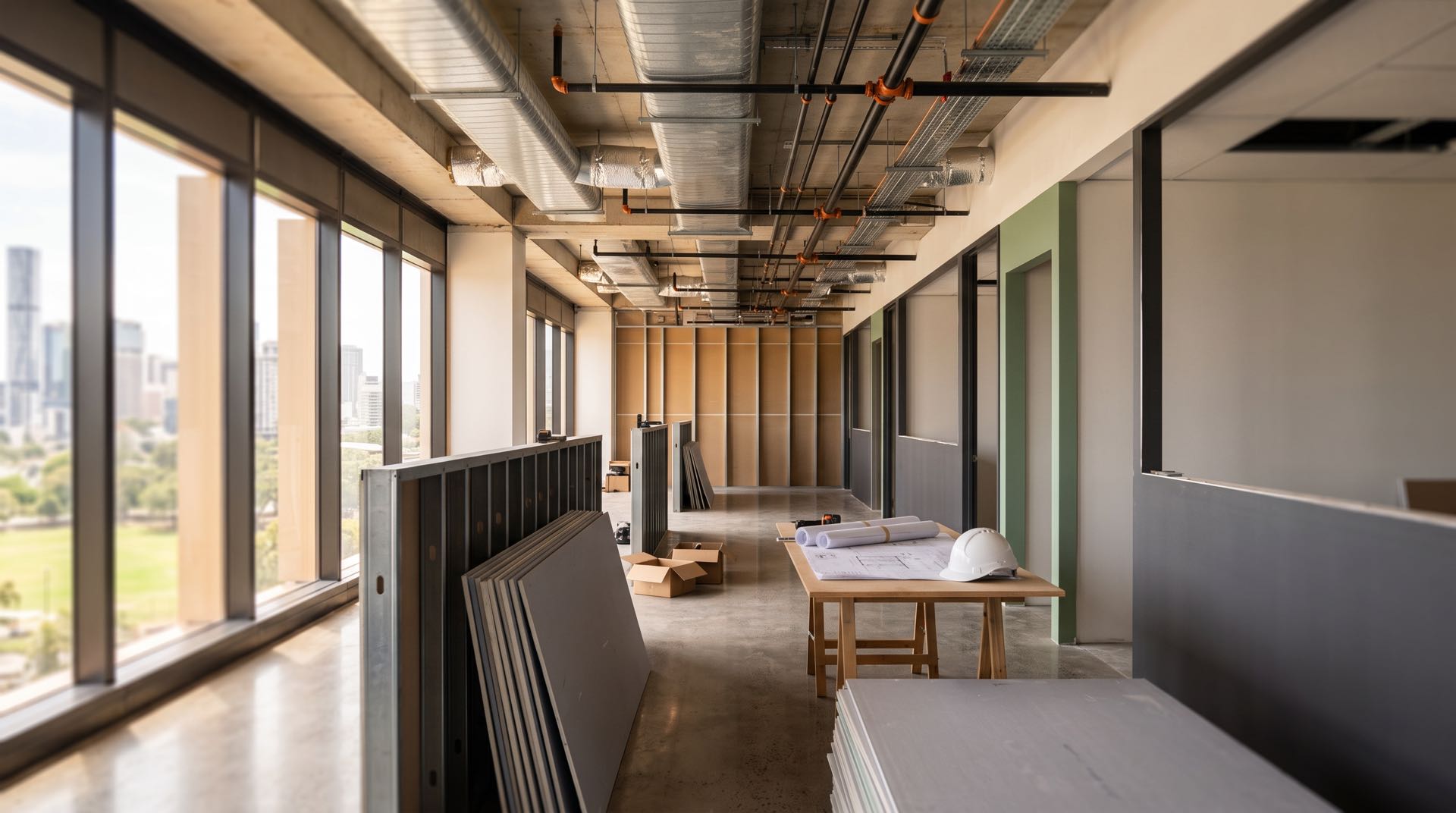
How to Choose a Commercial Fitout Company in Brisbane Without Getting Burned
Picking one of the many commercial fitout companies in Brisbane is a bigger decision than most business owners expect, and it's usually made under time pressure. A lease has been signed, a landlord's demanding a fitout completion date, and every week the shop or office sits unfinished is a week of rent paid on space you can't trade from. That pressure is exactly why so many Brisbane businesses end up with a contractor who overpromised on the timeline, underquoted the job, or simply wasn't licensed to do the work they took on. Getting the selection right the first time is cheaper, faster, and considerably less stressful than fixing it halfway through.
This isn't a list of generic tips you'd find on any fitout company's own marketing page. It's a practical rundown of what actually separates a contractor you can trust from one that'll leave you chasing defects six months after opening day.
Check the QBCC Licence Before You Sign Anything
In Queensland, commercial building work requires a licence from the Queensland Building and Construction Commission, and the classes matter more than most tenants realise. A contractor might hold a "Builder restricted to shopfitting" licence, which covers fitout-specific work, or a broader "Builder (open)" licence that allows unrestricted building work. There's also a trade-level "Shopfitting" classification for contractors who aren't operating as a builder at all. Ask which licence class your contractor holds and check it against the QBCC public register yourself. It takes two minutes and it tells you whether the business in front of you is actually permitted to do the scope you're asking for, not just the scope they're claiming.
This matters for a reason beyond compliance box-ticking. If something goes wrong and the contractor wasn't licensed for the work, you can lose access to statutory insurance protections and dispute pathways that exist specifically to protect commercial clients. It's a five-minute check that removes an entire category of risk. You can also read through our fitout compliance and QBCC licensing FAQs for common questions regarding contractor verification across all Brisbane service areas.
Ask About Insurance, Not Just Price
Public liability insurance levels vary a lot between contractors, and the difference matters more than people assume. Ten million dollars in cover has become the standard baseline for construction trades in Australia, covering electricians, carpenters, and shopfitters working on typical commercial jobs. Twenty million is increasingly required for larger projects, particularly anything involving a shopping centre landlord or a corporate tenancy, because many principal contractors and centre managers now insist subcontractors carry it before they'll even allow access to the site. If your fitout is happening inside a shopping centre or a multi-tenant office building, ask your contractor what cover they hold and whether it meets the centre management's minimum, because a mismatch here can delay your start date by weeks while paperwork gets sorted out.
Fixed Price vs Cost-Plus: Know What You're Actually Signing
Two contract structures dominate commercial fitouts, and they carry very different risk profiles for you as the client. A fixed price contract locks in the total cost upfront, which protects your budget but usually comes with a variation clause that lets the contractor charge extra for anything outside the original scope. A cost-plus arrangement bills you for actual materials and labour plus a margin, which can work out cheaper if the job goes smoothly but leaves your budget exposed if it doesn't. Neither structure is inherently better. What matters is that you understand which one you're signing, what counts as a variation, and how variations get approved before work proceeds. Ask for this in writing before the contract is signed, not after the first invoice arrives with line items you didn't expect.
A contractor who's cagey about explaining their contract structure, or who wants a verbal agreement to "get started while the paperwork catches up," is a contractor you should be wary of. The good ones walk you through it without being asked twice. For realistic cost benchmarks across different specification tiers, see our in-depth Office Fitout Cost Brisbane 2026 Pricing Guide.
Get at Least Three Quotes, and Compare Scope, Not Just the Bottom Line
It sounds obvious, but plenty of Brisbane business owners take the first quote that lands in their inbox because the deadline pressure makes shopping around feel like a luxury they don't have time for. Three quotes is a reasonable minimum, and the real work isn't comparing the totals, it's comparing what's actually included in each one. One quote might include electrical certification, waste removal, and make-good of the base building; another might exclude all three and look cheaper purely because of what's missing. Ask each contractor for an itemised breakdown and line them up side by side. The cheapest number on the page is often not the cheapest job once you've added back everything that was quietly left out.
Ask to See Completed Work, Not Just Renders
Renders and mood boards are easy to produce and tell you almost nothing about build quality. Ask instead for two or three completed Brisbane projects you can actually visit, ideally ones similar in scale and industry to yours. Retail fitouts and hospitality fitouts hold up differently to daily wear than a professional services office fitout does, so a portfolio full of impressive photography from a different sector won't tell you much about how this contractor will handle your specific brief. If a contractor is reluctant to arrange a site visit or can only offer photos, take that as a signal worth weighing. Browse through our recent completed commercial fitout projects to inspect real build quality across Brisbane.
Understand How Make-Good Obligations Factor Into Your Fitout Plan
Most Queensland retail and commercial leases include a make-good clause requiring the tenant to return the premises to its original condition, or to whatever condition the lease specifies, when the lease ends. That might mean removing walls you're about to build, restoring base building services, or simply a professional clean, depending on what your specific lease says. It's worth raising this with your fitout contractor at the design stage rather than treating it as a problem for years down the track. A good contractor will build your fitout in a way that makes eventual make-good simpler and cheaper, using demountable partitions or services that can be capped off cleanly rather than fixtures that require major structural work to remove. Bringing this up early, before the design is locked in, can save you a five-figure bill when the lease eventually expires. For industrial warehouse and logistics conversions, explore our commercial and industrial fitout capabilities.
Red Flags That Should Make You Walk Away
A few warning signs come up again and again in commercial fitout disputes. A contractor unwilling to name a dedicated project manager for your job, leaving you juggling messages between multiple tradespeople with no single point of contact. A quote with no itemised breakdown, just a lump sum and a start date. Reluctance to put payment milestones and variation processes in writing. Pressure to sign quickly because "the trades are booked out" without a written contract to back that urgency up. None of these are automatic disqualifiers on their own, but two or three together are a strong reason to keep looking. You may also want to understand the current market trends by reading our article on Retail & Office Fitout Trends Brisbane Businesses Are Backing in 2026.
On the flip side, the contractors worth engaging tend to ask you more questions than you ask them in that first meeting. They want to understand your trading hours, your industry's specific compliance requirements, and your actual budget before they'll commit to a number, because a rushed quote is usually a wrong quote.
Bringing It Together
Choosing a commercial fitout company in Brisbane comes down to a handful of checks that take a few hours combined: confirm the QBCC licence class matches the work, confirm the insurance cover meets your landlord's requirements, get the contract structure explained in plain language, collect at least three itemised quotes, and visit a completed job before you commit. None of this guarantees a perfect project, but it removes the most common ways Brisbane fitouts go wrong, and it puts you in a far stronger position if a dispute does arise later. Landlords and building managers respect tenants who show up with this level of preparation, and it tends to result in a smoother approvals process too.
Take the time upfront. The businesses that skip these checks are usually the ones explaining defects to their landlord six months after opening. Ready to speak with a fully QBCC-licensed contractor? Contact Brisbane Fitout Co today for an honest, itemised consultation.
Published By
Brisbane Fitout Co
QBCC Licensed Commercial Fit-Out Specialists across Brisbane.