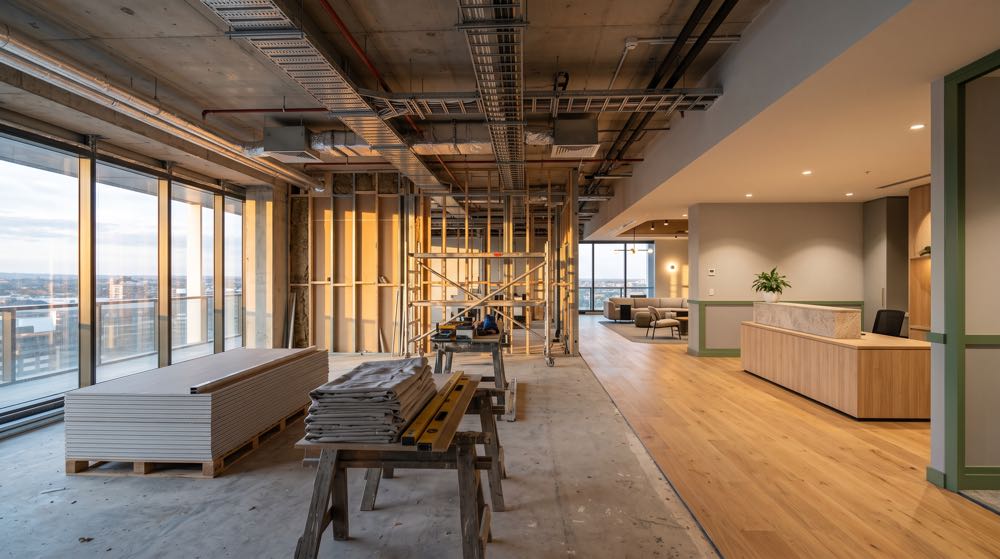
Fitout Project Timelines Brisbane: How Long It Actually Takes and How to Keep Trading While You Build
Ask ten Brisbane business owners how long their fitout took and you'll get ten different answers, most of them wrong by a few weeks. That's not because anyone lied. It's because "fitout" gets used to describe everything from a quick repaint and new counter to a full strip-out with new services, and the timeline for each is wildly different. If you're planning a retail fitout or office fitout in Brisbane and trying to work out when you'll actually be trading or back at your desks, the honest answer depends on three things: the size of the space, whether your use is changing, and how fast you make decisions once the builders are on site.
This guide walks through realistic fitout project timelines for Brisbane commercial spaces, what actually eats up the weeks, and the practical moves that keep a business open (or close it for the shortest possible stretch) while the work happens.
How Long Does a Commercial Fitout Actually Take?
Across Australia, a typical commercial fitout runs somewhere between 8 and 22 weeks from initial design through to final handover. That's a wide bracket on purpose, because the two biggest variables, floor area and approval pathway, move the number around a lot. In Brisbane specifically, mid-size retail projects are currently tracking at 12 to 18 weeks from brief to handover, which lines up with what most fitout companies here are quoting for a straightforward shop or office.
Broken down by size, construction alone (not counting design or approvals) tends to look like this for a Brisbane job:
- Under 100m² (a small café, boutique or single-office suite): 4 to 8 weeks on the tools
- 100 to 300m² (most standalone retail stores and small-to-mid office tenancies): 8 to 14 weeks
- 300m² and above (larger office floors, department-style retail, or commercial and industrial fitouts): 16 to 24+ weeks
Those figures are construction only. Add design and documentation at the front (2 to 4 weeks for initial concepts, more if you're still deciding on a layout) and you start to see why a "quick" fitout rarely finishes in under two months once you count everything from first sketch to opening day.
Where the Weeks Actually Go: Approvals
Approvals are where Brisbane projects most often blow their timeline, and it's worth understanding why before you sign a lease with an opening date already in mind. A straightforward internal fitout, same use, no structural changes, no change to the building's footprint, often doesn't need a development application at all. You can sometimes get moving on site within 2 to 3 weeks of engaging a contractor.
Change the use of the tenancy though, retail space becoming a café, an office becoming a health clinic or hospitality fitout, and you're into material change of use territory. Brisbane City Council's code-assessable applications are currently taking between 35 and 60 business days from lodgement, and that's before construction starts. If your application is impact-assessable (which triggers public notification), you can add several more weeks again. A private certifier can sometimes get a straightforward approval through in 2 to 6 weeks, but a full council assessment can stretch past 12 weeks. If your site sits in Spring Hill, Fortitude Valley, New Farm or West End, budget extra time again: these inner suburbs carry heritage overlays, and interior work touching original fabric can trigger a development application even on a modest scope. For further compliance details, see our fitout compliance and QBCC FAQs covering all Brisbane service areas.
Where the Weeks Actually Go: Joinery and Trades
The other timeline-killer is lead time on joinery and custom fixtures. Brisbane joinery lead times are currently sitting at 8 to 12 weeks, which is actually an improvement on the 14 to 18 week peaks of the last couple of years, but it's still long enough to catch out anyone who locks in a shop opening date before confirming when their counters and cabinetry will actually arrive. Order joinery the day your design is signed off, not the day construction starts, and you'll claw back most of that gap. You can also view examples of custom joinery and completed layouts across our recent completed fitout projects.
Minimising Downtime While the Work Happens
For most Brisbane operators, the real question isn't "how long will the fitout take" so much as "how much trading time will I lose." A few things genuinely move that number:
Lock in decisions before the trades arrive. Indecision during construction, changing a benchtop finish, moving a power point, adding a wall, is consistently the single biggest cause of blown schedules. Every variation ordered mid-build adds lead time, not just the day or two it takes to physically change, because it can push your trade sequence out and leave crews waiting on each other.
Ask about phased or staged fitouts. For larger retail and office spaces, a good Brisbane contractor can often sequence the work in zones so part of the space keeps trading while another section is under construction. This costs more in setup and protective hoarding than a single continuous build, but for a business that can't afford to go fully dark, it's usually worth it.
Know the out-of-hours rules before you assume you can use them. Standard construction hours in Brisbane are 6.30am to 6.30pm, Monday to Saturday, excluding public holidays, and most fitout work happens inside that window without any special approval. If your contractor wants to work outside those hours to compress the schedule, Brisbane City Council requires a formal out-of-hours construction approval, including a site-specific noise management plan and written notification to everyone within 100 metres of the site at least five days before work starts. Assessment takes a minimum of 20 business days once everything is lodged and paid for, and high-noise activities are banned outright between 10pm and 6.30am regardless of approval. In other words, out-of-hours work can help in some cases, but it's not a fast lever you can pull in week three when you're already behind.
Confirm your contractor holds the right QBCC licence. This sounds like a compliance footnote, but it affects your timeline directly. Commercial shopfitting and fitout work in Queensland legally requires a QBCC Commercial Building licence, and a contractor holding only a Residential Building licence can't lawfully perform the work. Engaging an unlicensed or incorrectly licensed contractor can mean stop-work orders partway through, which is a far worse delay than anything in the original program. For a checklist on vetting builders, read our guide on How to Choose a Commercial Fitout Company in Brisbane Without Getting Burned.
What It's Likely to Cost, and Why That Affects Your Schedule
Budget and timeline are tied together more than most people expect, because underfunded scopes tend to get redesigned mid-build, which resets the clock. Current Brisbane construction-only rates give a reasonable starting point: standard retail fitouts are running at roughly $1,300 to $2,500 per square metre, food and beverage fitouts (with the extra services and compliance that commercial kitchens demand) at $2,800 to $4,500 per square metre, commercial office fitouts at $1,400 to $2,800 per square metre, and medical or allied health fitouts, which carry the heaviest compliance load, at $2,500 to $4,000 per square metre. These are construction costs only; design, certification and FF&E sit on top. Read our full breakdown in the Office Fitout Cost Brisbane 2026 Pricing Guide.
When you're comparing quotes from commercial fitout companies in Brisbane, a price that sits well under these ranges is worth questioning rather than celebrating. It often means a scope that's missing something, services, compliance works, make-good obligations, that surfaces later as a variation and a delay. Stay ahead of design directions by reviewing our guide on Retail & Office Fitout Trends Brisbane Businesses Are Backing in 2026.
Building a Realistic Program
If you're trying to set an opening date right now, work backwards from a few fixed points rather than forwards from your lease start. Confirm whether your use requires a development application before you sign anything, since that single decision can add two to three months. Get your joinery order in the moment design is locked, not when construction begins. If you're in a heritage precinct, ask your contractor directly whether interior works will trigger a DA, because the answer isn't always obvious from the street. And whatever total timeline your contractor gives you, add roughly two weeks of buffer before any public opening date or lease commencement for a new lease, rent-free period, or marketing commitment. It's a small concession that saves a lot of stress when the fitout, like most of them, runs a little long.
None of this means a Brisbane fitout has to be slow or painful. It means going in with a timeline built on what actually happens on real local jobs, not the shortest-case scenario in a glossy brochure. Ready to discuss your timeline and lock in a fixed programme? Contact Brisbane Fitout Co for an obligation-free project consultation.
Published By
Brisbane Fitout Co
QBCC Licensed Commercial Fit-Out Specialists across Brisbane.